A phone that will not turn on is alarming in a way that most faults are not. There is no error message, no clue and no obvious cause – just a black screen and no response. The good news is that in a large proportion of cases the phone is not dead at all, and several of the fixes cost nothing.
Quick answer: why is my phone not turning on?
A phone that will not turn on almost always comes down to one of five things: a completely flat or failed battery, a faulty charging cable or port, a software crash that has left the phone frozen rather than off, a broken screen on a phone that is actually running, or liquid or impact damage to the board.
Start with a forced restart and a 30-minute charge on a known-good cable. Between them those two steps resolve most cases. If the phone vibrates, makes sounds, or shows up on a computer but the screen stays black, the phone is alive and you are looking at a display fault rather than a dead device.
First: is your phone actually off, or just showing a black screen?
This is the single most useful distinction, and almost nobody checks it first. A phone with a failed screen looks identical to a phone that is completely dead, but they are entirely different repairs at very different prices.
Run these three checks in order:
- Ring it from another phone. If it rings, vibrates or lights up an LED, the phone is powered on and working. Your problem is the display.
- Plug it into a computer. If the computer chimes, or the phone appears in File Explorer or Finder, it is running.
- Shine a torch at the screen in a dark room, at an angle. On phones with LCD screens, a failed backlight leaves the image faintly visible underneath. If you can just make out your home screen or lock screen, the display has failed rather than the phone.
If any of those tests show signs of life, stop worrying about the battery. You need a screen repair, and everything on the phone is safe.
The torch test only works on LCD panels. Most modern flagships use OLED, which has no backlight, so a blank OLED screen needs a proper diagnosis rather than that shortcut.
Step 1: force restart the phone
Phones do not always crash gracefully. A software freeze can leave a handset in a state where the screen is off, the buttons do nothing, and it looks completely dead – while the battery quietly drains. A forced restart cuts power to the hardware and reboots it, and it costs nothing to try.
The button combination differs by phone:
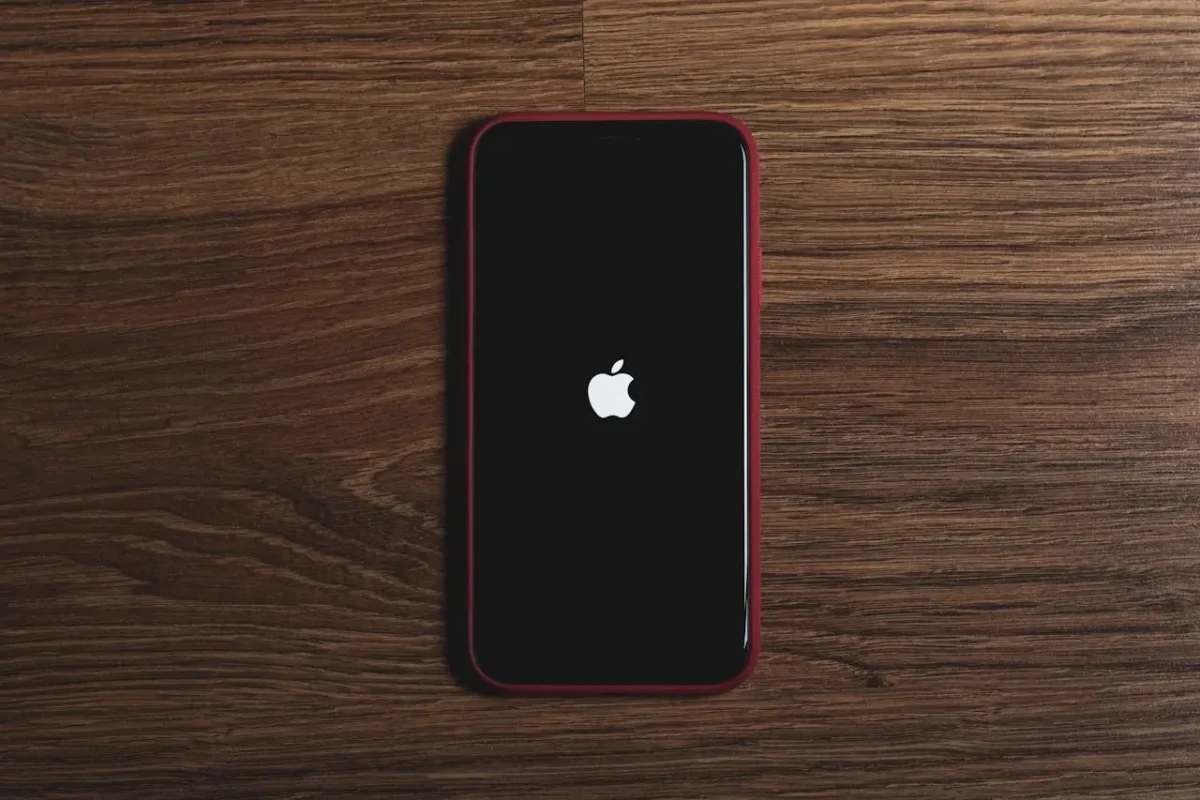
- iPhone 8 and newer: press and release volume up, press and release volume down, then press and hold the side button for around 10 seconds until the Apple logo appears.
- iPhone 7 and 7 Plus: hold volume down and the side button together for about 10 seconds.
- iPhone 6s and earlier: hold the home button and the top or side button together.
- Samsung, Google Pixel, Huawei and most Android phones: hold power and volume down together for 10 to 20 seconds.
Hold longer than feels reasonable. Many people give up after three or four seconds, which is not enough. If nothing happens on the first attempt, plug the phone into a charger and try the same combination again while it is connected.
Step 2: charge it properly for 30 minutes
A deeply discharged lithium battery cannot power a phone straight away. If a battery has been flat for days or weeks, it needs to build up enough charge before the phone will even display a charging symbol – and that can take 15 to 30 minutes of being plugged in with no visible sign that anything is happening.
Do this properly rather than assuming:
- Use a different cable. Cables fail internally at the strain relief far more often than ports fail, and a broken cable shows no outward damage. This is the most common cause of a phone that seems dead.
- Use a different plug, and a wall socket rather than a laptop USB port. Laptop ports often deliver too little current to revive a flat battery.
- Leave it for 30 minutes before judging. Do not press buttons repeatedly during this time.
- Try wireless charging if your phone supports it. If the phone charges wirelessly but not by cable, the charging port is your fault, not the battery.
That last test is genuinely useful and almost nobody thinks of it. It isolates the port from the battery in seconds.
Step 3: check the charging port for lint
This is the most under-appreciated cause of a phone that will not turn on, and it is free to fix.
Every time a phone goes into a pocket or a bag, the charging socket collects fibres. Over months that lint compacts into a solid plug at the bottom of the port, and the cable can no longer seat fully. It feels like it is connected – it may even click – but the contacts are not meeting, so the phone never charges and eventually goes flat.
Shine a torch into the port and look. If you can see grey fuzz packed at the bottom, that is your problem. Switch the phone off, and gently hook it out with a wooden or plastic toothpick. Never use a metal pin, a needle or a paperclip – you can short the contacts or bend a pin, turning a free fix into a paid repair.
If the port is clean and the phone still will not charge, our guide to phones that will not charge covers the next steps in detail.
Step 4: rule out the battery
Lithium batteries do not last forever. They degrade by charge cycles rather than by calendar age, so a phone charged daily for three or four years will hold a fraction of its original capacity. Eventually a cell degrades to the point where it cannot deliver enough current to boot the phone at all, even though it may still show a charge.
Signs that the battery is the culprit:
- The phone died suddenly at 20 or 30 per cent rather than counting down to zero.
- It had been shutting down unexpectedly in cold weather for weeks beforehand.
- It only powers on while physically connected to a charger, and dies the moment you unplug it.
- The back of the phone has started to bulge, or the screen sits slightly proud of the frame.
That last one matters. A swollen battery is a genuine safety issue. Stop charging the phone immediately, do not press on the back or try to compress it, and do not puncture it under any circumstances. Get it to a repair shop as it is.
If the phone had been draining unusually fast before it died, our guide to fast battery drain explains what was probably happening.
Step 5: consider what happened just before it died
The 24 hours before a phone stops turning on usually contain the answer. Think back honestly:
- Was it dropped? Even a knock that left no visible damage can disturb the battery or display connector inside.
- Did it get wet? Including rain, a bathroom shelf during a shower, or a spill you thought you had dried. Corrosion works slowly, so a phone can fail days after the event.
- Was it very hot or very cold? A phone left on a car dashboard in summer or in a coat pocket during a frost can shut down to protect itself.
- Did it fail during or just after a software update? An interrupted update can leave a phone unable to boot, which is often recoverable.
- Was it charging with an unbranded cheap charger? Poor-quality chargers can deliver unstable voltage and damage the charging circuit.
If liquid is involved, act now rather than later. Do not plug it in and do not try to charge it – power running through a wet board is what turns a recoverable phone into a dead one, and it causes more write-offs than the liquid itself. Rice does nothing useful; it draws surface moisture while corrosion continues underneath. Our guide to water damaged phones explains the first hour in detail, and our water damage repair service covers the professional clean.
Step 6: try a recovery boot before giving up
If the phone still shows nothing, there is one more free step worth trying. Both iPhone and Android can be forced into a recovery mode that bypasses the normal boot process, and a phone that reaches recovery is not dead – it has a software problem, which is far better news than a hardware one.
iPhone: connect it to a computer, open Finder or iTunes, then perform the forced restart button sequence for your model but keep holding the final button past the Apple logo until a cable-and-computer image appears. If you see that screen, the hardware is fine and the software needs restoring.
Android: with the phone off, hold volume down and power together. Most Samsung, Pixel and Huawei handsets will boot into a bootloader or recovery menu. If you reach a menu, the phone is alive.
Be aware that restoring an iPhone in recovery mode usually erases it. If you have no backup, that is a very good reason to speak to a repair shop first rather than clicking through – data recovery is often possible before a restore, and impossible afterwards.
If the screen is black or the phone will not respond at all, see our full guide on how to get data off a broken phone for scenario by scenario steps before you hand it in.
What causes a phone to stop turning on?
| Cause | Typical signs | Fix |
|---|---|---|
| Flat or failed battery | Died suddenly at 20-30%, or only runs while plugged in | Battery replacement |
| Faulty cable or plug | Charges on a different cable, or wirelessly but not wired | Free – replace the cable |
| Lint in the charging port | Cable feels loose or will not click in fully | Free – clear the port |
| Failed charging port | Clean port, good cable, still no charge | Charging port repair |
| Broken display | Phone rings, vibrates or shows on a computer | Screen replacement |
| Software crash or failed update | Reaches recovery mode | Software restore |
| Liquid damage | Known exposure, possible corrosion | Board clean, sometimes data recovery only |
| Impact damage to the board | Dropped, no response to anything | Board-level diagnosis |
What it costs to fix in the UK
Because the cause determines the repair, the price range is wide. These are our fixed prices, including parts, labour and a 12-month guarantee:
- Charging port cleaning – free as part of any diagnosis
- Battery replacement – typically £45 to £89 depending on model
- Charging port repair – typically £49 to £79, see iPhone and Samsung pricing
- Screen replacement – varies widely by model; see our screen repair cost guide
- Diagnostic service – £15, which buys a proper investigation and a fixed quote before any work begins
For model-specific prices see iPhone repairs, Samsung repairs, Google Pixel repairs and Huawei repairs. Battery pricing by model is on our iPhone battery replacement and Samsung battery replacement pages, and this guide breaks down what an iPhone battery should cost.
Is it worth repairing a phone that will not turn on?
It depends entirely on what is wrong, which is why a diagnosis matters before you make the decision.
Almost always worth it: a battery, a charging port, or a cleaning job. These are inexpensive relative to any handset and they restore the phone completely.
Usually worth it: a screen replacement on a phone that is otherwise sound, particularly if the handset still has resale value or you were not planning to replace it.
Often not worth it: board-level liquid damage on an older or budget phone, or a phone needing several repairs at once. At that point the sensible spend is usually data recovery rather than a full repair, and we will tell you when you have reached it rather than quoting for everything.
What we will not do is take payment for a repair that leaves you disappointed. If the honest answer is that the phone is not worth saving, you will hear that.
What about the data?
This is what most people are actually worried about, and it deserves a direct answer.
If the phone is not turning on because of a battery, a charging port or a screen, your data is completely safe. None of those repairs touch the storage, and everything comes back exactly as it was.
Where liquid or board damage is involved, data becomes the priority rather than the repair. Even a phone that will never work again will often give up its photographs, messages and contacts – but the odds fall the longer corrosion is left, which is the main argument for acting quickly rather than leaving it in a drawer for a fortnight. Our data recovery service covers exactly this.
One practical point: if your phone is currently working but showing warning signs – random shutdowns, rapid drain, refusing to charge – back it up today. It is far easier to protect data before a phone dies than after.
What not to do
- Do not put it in rice. It does not draw moisture from inside the board and it delays the clean that would actually help.
- Do not keep pressing the power button repeatedly. If the phone is frozen, a proper forced restart is what is needed.
- Do not use a metal pin in the charging port. You risk shorting the contacts or bending a pin.
- Do not charge a phone with a swollen back. Stop and get it looked at.
- Do not try a hairdryer or oven “fix”. Heat damages adhesives, screens and batteries, and can make a swollen cell genuinely dangerous.
- Do not restore an iPhone in recovery mode if you have no backup until you have asked about data recovery first.
How we diagnose a phone that will not turn on
When a dead phone arrives with us, we work through the same sequence every time rather than guessing.
- Bench power test. We connect the phone to a supply that shows exactly how much current it is drawing. That single reading tells us whether the board is alive, shorted or drawing nothing at all – before anything is opened.
- Known-good cable and charger. Eliminating the simplest cause first.
- Port inspection and cleaning. Compacted lint is cleared at no charge.
- Battery check. Voltage and behaviour under load, which reveals a cell that shows charge but cannot deliver current.
- Display isolation. A test screen tells us whether the phone is running behind a failed panel.
- Corrosion inspection. If liquid is suspected, the board is examined before power is applied again.
You get a fixed price after that. If the answer turns out to be a £6 cable, we will tell you that too.
Other devices
The same fault affects tablets and laptops, though the causes differ. If you are here for a different device, see why an iPad will not turn on or why a laptop will not turn on.
And if your phone does turn on but something else is wrong, these may help: a phone that keeps restarting, a flickering screen, a green line on the screen or an unresponsive touchscreen.
Frequently asked questions
Why is my phone not turning on even when plugged in?
Most often the cable, the plug or the charging port rather than the phone. Try a different cable and a wall socket rather than a laptop port, then check the charging socket for compacted lint with a torch. If the phone charges wirelessly but not by cable, the port is your fault. If none of that works, a failed battery that can no longer accept charge is the next most likely cause.
How do I force restart a phone that will not turn on?
On iPhone 8 and newer, press and release volume up, press and release volume down, then hold the side button for around 10 seconds. On iPhone 7, hold volume down and the side button together. On most Android phones including Samsung, Pixel and Huawei, hold power and volume down together for 10 to 20 seconds. Hold longer than feels necessary, and try again while the phone is plugged in.
How long should I charge a dead phone before it turns on?
At least 30 minutes on a known-good cable and a wall plug. A deeply discharged lithium battery needs to build up charge before the phone can display anything at all, so a completely flat phone can show no sign of life for 15 to 30 minutes. Do not judge it after five.
My phone vibrates but the screen stays black. What does that mean?
The phone is powered on and working, and the display has failed. That is a screen repair rather than a dead phone, and your data is entirely safe. Confirm it by ringing the phone or plugging it into a computer to see whether it is recognised.
Can a completely dead phone be fixed?
Usually, yes. Most phones that will not turn on need a battery, a charging port, a screen or a software restore, and all of those are routine repairs. Board-level liquid damage is the exception, and even then data recovery is often still possible.
Will I lose my data if my phone will not turn on?
Not for a battery, charging port or screen repair – none of those touch your storage and everything comes back as it was. With liquid or board damage the picture is less certain, but photographs and messages can often still be recovered. The odds improve significantly if you act quickly rather than leaving the phone for weeks.
Is a swollen battery dangerous?
Yes. If the back of your phone is bulging or the screen is lifting from the frame, stop charging it immediately, do not press or puncture it, and have it replaced. A swollen lithium cell is a genuine fire risk and is not something to keep using.
Does putting a wet phone in rice work?
No. Rice absorbs surface moisture but does nothing about liquid already inside the phone, and while it sits there corrosion continues on the board. What actually helps is switching the phone off, not charging it, and getting it professionally cleaned quickly.
How much does it cost to fix a phone that will not turn on?
It depends on the cause. Clearing a blocked charging port is free as part of our diagnosis. A battery replacement is typically £45 to £89 and a charging port repair £49 to £79. Screen prices vary by model. Our £15 diagnostic covers a full investigation and a fixed quote before any work starts.
How long does the repair take?
Battery, charging port and most screen repairs are usually completed the same day once the phone is with us. Liquid damage takes longer because the board needs cleaning and drying properly before it can be tested. We confirm a realistic timescale with the quote.
Get a fixed price before you commit
If your phone will not turn on and the free steps above have not worked, we can tell you what is actually wrong before you spend anything. iExpert Repairs works from our Essex workshop and accepts devices from across the UK through a tracked, fully insured mail-in service, so you do not need to be local.
Contact us with your model and what happened, and we will come back with a fixed price and a realistic timescale. Nothing is done until you approve it, and if the phone is not worth repairing we will say so rather than take the booking.
We cover mobile phone repairs across every major brand, and UK-wide tech repairs for tablets, laptops and everything else.
Back to posts